
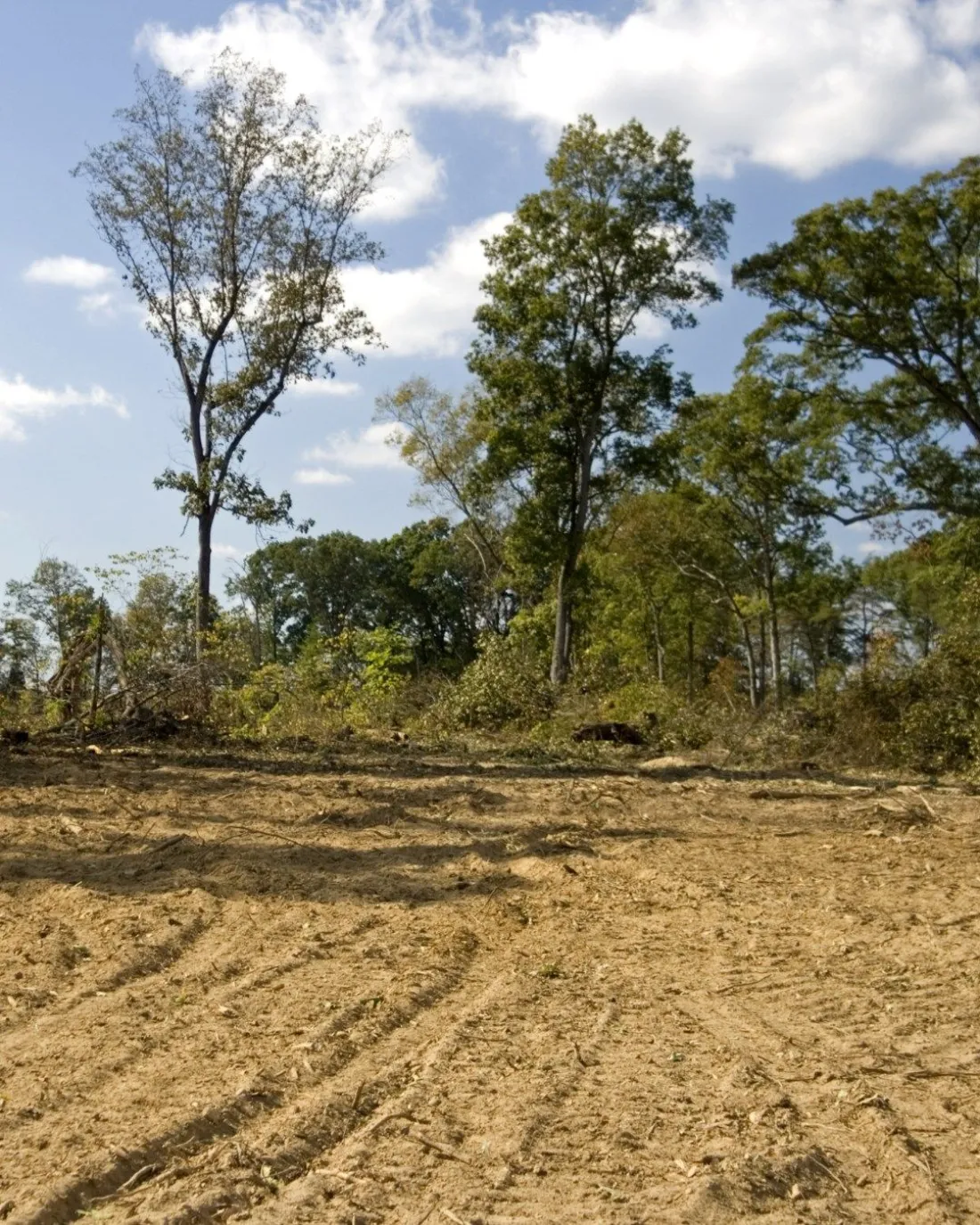
Do you need a permit to clear land in St. Tammany Parish?
Sometimes. In unincorporated St. Tammany Parish, a single-family homesite outside a platted subdivision turns on lot size. Under 5 acres, the homesite is exempt from the land clearing permit. At 5 acres or more, it needs the permit before the building or site work permit.
Two-family lots of 0.5 acre or more need one too, and so do multi-family and larger subdivisions. Commercial sites need one, and so does forestry or farm work of 5 acres or more. Which group you fall in decides what happens before any land clearing starts on your lot.
These rules come from the parish Unified Development Code, August 2024 edition. They cover unincorporated St. Tammany only. Inside Covington, Mandeville, Slidell, Madisonville, Abita Springs, Pearl River or Folsom, check with that town.
Which projects need a land clearing permit?
The code requires the application for most nonresidential projects and some residential ones. Approval comes before any building permit or site work permit.
| What the land is being cleared for | Parish land clearing permit |
|---|---|
| Single-family home, lot under 5 acres, outside a platted subdivision | Exempt |
| Single-family home, lot of 5 acres or more, outside a platted subdivision | Required |
| Two-family home, lot under 0.5 acre | Exempt |
| Two-family home, lot of 0.5 acre or more | Required |
| Multi-family, 3 or more units, outside a platted subdivision | Required |
| Subdivision creating 6 to 24 lots on more than 5 acres | Required |
| Subdivision creating 25 lots or more | Required |
| Forestry or farm work of 5 acres or more | Required |
| Forestry or farm work of 5 acres or less | Exempt |
| Commercial, institutional, industrial and similar sites | Required |
Both homesite rows cover lots outside a platted subdivision. The code also lists forestry or farm work of exactly 5 acres as both required and exempt. Ask the parish about either case.
Exempt means no parish land clearing permit. Grading, fill and other permits can still apply, so confirm your own lot with the parish.
What goes into a land clearing application?
The application is yours as the property owner, and we work through it with you. It goes to the parish Department of Planning and Development with these attachments:
- A recorded boundary survey with a legal description
- Recorded cash sales for the property
- A site plan showing all required buffers and landscape areas
- For commercial sites, including multi-family, a tree survey of all live oaks and cypress 18 inches in caliper or larger
- For forestry or farm requests, a timber deed and plan
On a homesite of 5 acres or more, the plan also shows a natural area. The code’s summary table lists a 25-foot street buffer and 50-foot side and rear buffers on each lot. Inside it, invasive plants like tallow may come out, along with dead or diseased trees the parish approves.
Before you file, the code encourages an informal conference with the Director of Planning and Development or a designee. W2 does no surveying, wetland delineation or engineering. A licensed surveyor or consultant does that work, and we clear to their lines and flags.
What happens after you apply?
The Department of Planning and Development can approve the application, approve it with conditions or deny it.
After approval, and before the permit is issued, the applicant stakes and flags the property. Next comes a pre-land clearing inspection of the staked and flagged site. Only after the site passes does the parish issue the permit.
The code’s fee schedule lists land clearing at $250, so confirm the current fee when you apply. The permit is good for 2 years. All permitted work and a compliance inspection have to be done in that window. An extension of up to 1 year takes payment of the permit fees, a Notice of Continuation and parish approval.
What does a land clearing permit not cover?
The parish will not consider grading, fill or site work of any kind as part of a land clearing permit. Those need their own permits. Our site preparation work picks up where the clearing ends. For the fill rules, see our guide to house pad permits in St. Tammany Parish.
How close to a creek or river can you clear?
On a project that needs the permit, the site plan shows waterway buffers. The width depends on the kind of waterway:
- Intermittent waterway, a broken or dashed line on the USGS quadrangle map: at least 35 feet from the edge of the bank
- Blue line waterway, a solid blue line on the same map: at least 50 feet from the edge of the bank on either side
- Scenic river: 100 feet from the bank when the Louisiana Department of Wildlife and Fisheries (LDWF) determines no permit is required
In a scenic river buffer, under brushing (clearing the brush below the trees) needs a scenic review permit from LDWF.
What if there are wetlands on the land?
Every land clearing permit and activity must meet Chapter 700 of the code. It must also meet any U.S. Army Corps of Engineers requirements that apply. The Corps is a federal agency, so a parish exemption does not change its rules.
Some clearing requests include a wetland or possible wetland. In these 3 cases, a Clean Water Act 404 permit comes before the parish reviews the land clearing permit:
- a major subdivision
- a commercial site in a critical drainage area
- a residential parcel of 5 acres or more in a critical drainage area
Wetlands the Corps has not approved for removal are drawn on the site plan. They are flagged so no one clears them by accident. A licensed surveyor or consultant delineates them, and we keep our machines outside the flags.
What does the parish want at the road?
On a project that needs the permit, the code also sets rules at the road. It calls for an entrance roadway built so equipment does not damage the shoulder or road. The roadway also keeps dirt, brush and debris off the public road.
A culvert goes in at the entrance, placed per parish or state requirements, to keep drainage working along the road. When the clearing is done, rights-of-way and existing drainage go back to their pre-existing condition. We do culvert installation, so the entrance culvert can go in as part of the job.
Can you burn the brush after clearing?
On projects under the parish land clearing rules, burning has limits. Open burning of land clearing and timber harvesting debris is banned within 1,000 linear feet of an occupied dwelling. The same ban covers any recorded subdivision. Forestry mulching grinds brush in place, which leaves no pile to burn.
What happens if you clear first and ask later?
Under the code, no one may clear land or fill it without first getting a permit and work order. Those come from the parish, state and federal agencies with jurisdiction.
Skipping a required permit or work order brings a fine equal to double the permit fee for a first offense. A second offense brings a fine of four times the fee. After a third, the parish issues no new work order for 12 months. At the code’s $250 fee, the first two fines come to $500 and $1,000.
FAQ
Do I need a permit to clear land in St. Tammany Parish?
A small homesite is exempt, but many other projects need one. In unincorporated St. Tammany Parish, a single-family homesite under 5 acres, outside a platted subdivision, needs no land clearing permit. A single-family lot of 5 acres or more needs one. Inside Covington, Mandeville, Slidell or another town, check with that town.
How much is a land clearing permit in St. Tammany Parish?
The code’s fee schedule lists land clearing at $250, so confirm the current fee when you apply. The permit is good for 2 years. All permitted work and a compliance inspection must be done in that time. An extension of up to 1 year takes the permit fees, a Notice of Continuation and parish approval.
What do I need to apply for a land clearing permit?
You need a recorded boundary survey with a legal description and recorded cash sales. Add a site plan showing all required buffers and landscape areas. Commercial sites, including multi-family, add a tree survey of live oaks and cypress 18 inches in caliper or larger. Forestry and farm requests add a timber deed and plan.
How close to a creek can I clear in St. Tammany Parish?
On projects that need the permit, it depends on the waterway. An intermittent waterway keeps a buffer of at least 35 feet from the bank. A blue line waterway keeps at least 50 feet on either side. Next to a scenic river, the parish buffer is 100 feet when LDWF requires no permit.
Can I burn brush after clearing land in St. Tammany Parish?
Not close to an occupied home or inside a recorded subdivision, under the parish land clearing rules. They prohibit open burning of land clearing and timber harvesting debris within 1,000 linear feet of an occupied dwelling. They also ban it within any recorded subdivision. Other burn rules may apply, so ask the parish first.
What happens if I clear land without a permit in St. Tammany Parish?
Working without a required permit brings a fine equal to double the permit fee for a first offense. A second offense brings four times the fee. After a third, the parish issues no new work order for 12 months. At the code’s $250 fee, the first two fines come to $500 and $1,000.
What should you do before the first tree comes down?
Confirm whether the land sits inside a town or in the unincorporated parish. Then check the lot size, the project and any waterway or wetland with the parish Department of Planning and Development.
W2 Commercial Construction is a Louisiana State Licensed Contractor, LA State Lic# 78829, and fully insured. We have 20+ years on Northshore ground.
We do the clearing and work through the permit steps with you. We quote land clearing by the job after a site visit. Call (985) 966-2584 for a free estimate.